


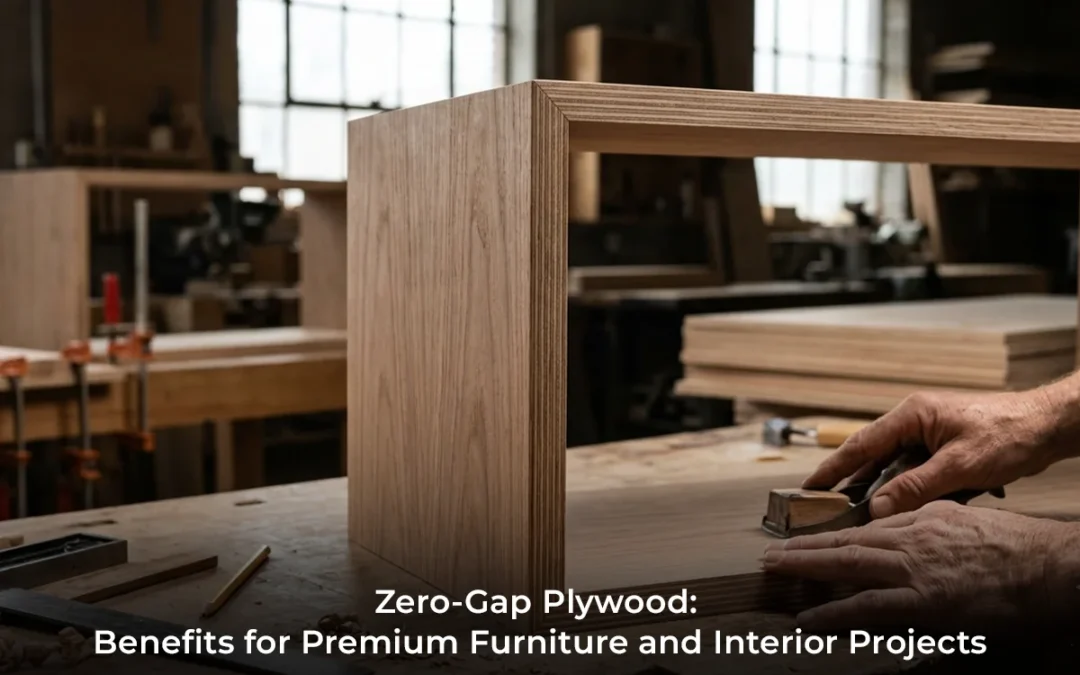
When it comes to premium furniture and interior projects, the quality of the base material matters as much as the final finish. Cabinets, wardrobes, wall panels, modular furniture, and other interior elements require plywood that can support precise fabrication while delivering a clean and refined appearance.
This is where Zero Gap Plywood becomes an important consideration. Designed with a focus on consistent core construction and minimal gaps between veneers, it can provide a more uniform base for furniture and interior applications.
At AK Apple, understanding the importance of quality plywood for furniture and interiors means focusing on the material characteristics that influence fabrication, finishing, and the final appearance of a project.
What Is Zero Gap Plywood?
Zero Gap Plywood refers to plywood manufactured with tightly placed veneer layers and minimal gaps within the core. The consistency of the internal structure can be particularly important when plywood is cut, drilled, routed, joined, laminated, or veneered.
In furniture manufacturing, the plywood core is not always visible after finishing. However, its construction can influence how the sheet behaves during fabrication and how cleanly edges and joints can be finished.
For premium applications, where precision and appearance are important, selecting plywood with consistent construction can help support better fabrication outcomes.
Why Is Zero Gap Plywood Important for Premium Furniture?
Furniture involves several stages of cutting, assembly, and finishing. Small inconsistencies in the core can become more noticeable when panels are machined or when edges are exposed.
Zero Gap Plywood for Furniture can be useful in applications where clean construction and precise detailing are required.
Some potential advantages include:
- More consistent internal construction
- Cleaner cutting and machining
- Better support for detailed furniture work
- Improved suitability for edge finishing
- A uniform base for laminates and veneers
- Greater consistency across furniture components
For manufacturers and carpenters, a consistent plywood panel can make fabrication more predictable and help achieve the desired finish.
What Are the Key Benefits of Zero Gap Plywood?
1. Consistent Core Construction
The core is an important part of plywood’s overall structure. Minimal gaps between veneer layers can provide greater consistency throughout the panel.
This can be especially valuable when the plywood is being used for precision furniture components.
2. Cleaner Edges
Furniture often includes exposed edges, grooves, routed profiles, and detailed joints. A consistent core can help reduce the chances of unexpected voids appearing during cutting or machining.
This can make edge finishing and detailing easier.
3. Better Finishing Potential
Premium furniture may be finished with laminates, veneers, paints, or other decorative surfaces. A uniform substrate can provide a better foundation for these finishes when the appropriate preparation and installation methods are followed.
4. Suitable for Detailed Fabrication
Custom furniture often involves precise dimensions and complex designs. Consistent plywood construction can support applications where accurate cutting, drilling, and assembly are important.
5. Refined Final Appearance
In high-end interiors, small details can have a significant visual impact. Clean edges, accurate joints, and consistent surfaces contribute to the finished appearance of furniture and cabinetry.
Where Can Zero Gap Plywood Be Used?
The applications of Zero Gap Plywood can extend across residential, commercial, and custom interior projects, depending on the product’s specifications.
Common applications may include:
- Premium wardrobes
- Modular kitchens
- Cabinets
- TV and media units
- Custom furniture
- Office furniture
- Display units
- Wall panelling
- Retail fixtures
- Interior partitions
The appropriate plywood grade should always be selected according to the specific requirements of the application, including moisture exposure, structural demands, thickness, and finishing method.
How Does Zero Gap Plywood Benefit Interior Projects?
Interior projects often require multiple materials and finishes to work together. Plywood may form the structural base for cabinets, wardrobes, storage units, wall features, and other built-in elements.
For Plywood for Interior Projects, construction consistency can be particularly relevant because the material may undergo extensive cutting and finishing before installation.
A well-selected plywood panel can help fabricators maintain consistency across multiple components. This is important when several cabinets or furniture pieces need to align precisely within a larger interior design.
For designers and contractors, choosing the right plywood at the beginning can therefore help reduce material-related challenges during later stages of fabrication.
Zero Gap Plywood vs Regular Plywood
Not every project requires the same level of plywood construction. General-purpose plywood can be suitable for many applications, while premium furniture and detailed interiors may require more specific material characteristics.
| Feature | Zero Gap Plywood | General-Purpose Plywood |
| Core construction | Focus on minimal internal gaps | Depends on grade and manufacturing |
| Furniture applications | Suitable for precision-oriented work | Depends on product specifications |
| Edge detailing | Supports clean machining | Varies by construction |
| Finishing | Suitable for premium finishing applications | Depends on surface quality |
| Interior applications | Suitable for various detailed applications | Broad range of uses |
The comparison should not be based on the product name alone. Grade, thickness, construction, certifications, moisture resistance, bonding, and intended use should all be considered before selecting plywood.
How to Choose Premium Plywood for Furniture?
Selecting Premium Plywood for Furniture involves looking beyond the surface appearance of a sheet.
Consider the following factors:
Plywood grade: Choose a grade suitable for the intended furniture application.
Core construction: Examine the consistency of the plywood construction and whether it meets the project’s requirements.
Thickness: Select a thickness appropriate for the furniture’s design and structural needs.
Moisture conditions: Furniture used in kitchens, utility areas, or other moisture-prone locations may require plywood with suitable moisture resistance.
Surface finish: Consider whether the plywood will be laminated, veneered, painted, or finished in another way.
Manufacturer specifications: Check the product’s technical information and recommended applications before purchase.
Choosing plywood based on the complete project requirement helps ensure that the material and application are properly matched.
Is Zero Gap Plywood Suitable for Premium Interiors?
Premium interiors often feature custom furniture, precise cabinetry, detailed storage solutions, and carefully finished surfaces. These applications can place greater importance on the consistency of the underlying material.
Zero Gap Plywood can be considered for such projects where its construction and technical specifications match the requirements of the application.
However, zero-gap construction should be viewed as one factor in plywood selection. Overall quality, grade, thickness, moisture resistance, bonding, certifications, and intended use should also be evaluated.
How Can AK Apple Help with Plywood Selection?
Choosing the right plywood is an important part of planning any furniture or interior project. The material should match the application’s structural requirements, moisture conditions, design, and finishing needs.
AK Apple focuses on providing plywood solutions for furniture and interior applications, helping customers consider the material characteristics required for different project needs.
Whether the requirement is for premium furniture, cabinetry, wardrobes, or broader interior applications, selecting plywood based on the project’s specific requirements can contribute to a more consistent and well-finished result.
Final Thoughts
The quality of plywood can influence the fabrication, finishing, and overall appearance of furniture and interior elements. For premium projects, selecting a material with consistent construction can make an important difference.
Zero Gap Plywood offers a construction-focused option for applications where clean detailing, consistent panels, and precise fabrication are important. From wardrobes and modular kitchens to custom furniture and interior features, it can support a wide range of design requirements when the appropriate grade and specifications are selected.
At AK Apple, the focus is on helping customers make informed plywood choices based on the requirements of their furniture and interior projects. Choosing the right material at the beginning can help create finished spaces that combine functionality, precision, and a refined appearance.
FAQs
What is Zero Gap Plywood?
Zero Gap Plywood refers to plywood manufactured with a focus on consistent veneer construction and minimal gaps within the internal core.
Is Zero Gap Plywood good for furniture?
It can be suitable for furniture where consistent construction and precise fabrication are important. The specific grade and product specifications should be checked for the intended application.
What are the benefits of Zero Gap Plywood?
Key benefits can include consistent core construction, cleaner machining, better edge detailing, and suitability for applications requiring precise fabrication and finishing.
Where can Zero Gap Plywood be used?
It can be considered for wardrobes, kitchens, cabinets, custom furniture, TV units, office furniture, display units, wall panelling, and other interior applications, depending on its specifications.
Is Zero Gap Plywood suitable for modular kitchens?
It can be used for modular kitchen applications when the selected plywood grade provides the required moisture resistance and structural performance for the environment.
How do I choose Premium Plywood for Furniture?
Consider the plywood grade, core construction, thickness, moisture resistance, surface requirements, certifications, and manufacturer’s recommended applications.
Why is plywood important for interior projects?
Plywood often forms the structural base of furniture and built-in interior elements. Its quality can affect fabrication, finishing, durability, and the final appearance of the project.