


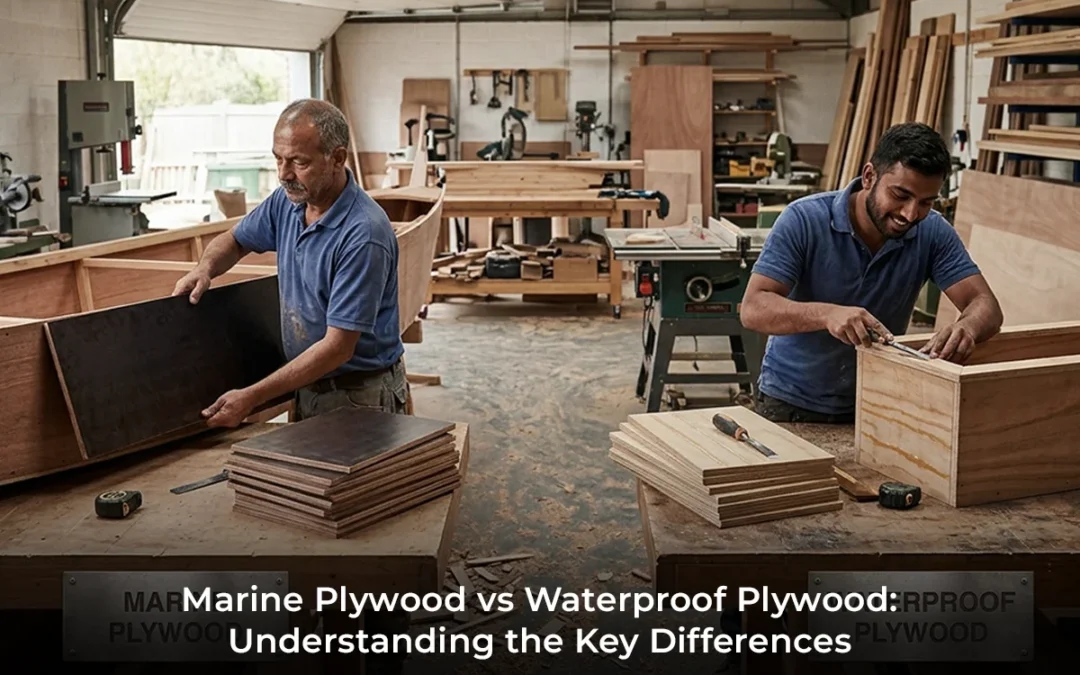
Choosing the right plywood is an important decision when building furniture, kitchens, wardrobes, and other interior elements. This becomes even more important when the material may encounter moisture, humidity, or water.
Two terms that often create confusion are Marine Plywood and Waterproof Plywood. While both are associated with moisture-resistant applications, they are not necessarily the same product or suitable for every situation.
Understanding Marine Plywood vs Waterproof Plywood can help homeowners, architects, contractors, and furniture manufacturers choose a plywood solution based on the actual requirements of their project.
What Is Marine Plywood?
Marine plywood is plywood manufactured to meet specific requirements associated with demanding moisture and water-exposure applications. Its construction, bonding, and manufacturing specifications are designed for environments where moisture resistance is a key consideration.
The term “marine” should not simply be interpreted as meaning that the plywood can remain exposed to water indefinitely. Product standards and certifications should always be checked before purchase.
Marine plywood is generally considered for applications where higher resistance to moisture and demanding environmental conditions is required.
What Is Waterproof Plywood?
Waterproof plywood is a general term used for plywood products designed or marketed for applications requiring resistance to moisture or water exposure.
However, the word “waterproof” by itself does not tell you everything about a plywood product. Its actual performance depends on its grade, bonding, construction, certification, and manufacturer’s specifications.
Therefore, when comparing Marine Plywood vs Waterproof Plywood, it is important to look beyond the product name and understand the technical specifications.
Marine Plywood vs Waterproof Plywood: Key Differences
The Difference Between Marine and Waterproof Plywood is best understood by comparing their intended applications, construction requirements, and product specifications.
| Factor | Marine Plywood | Waterproof Plywood |
| Primary consideration | Demanding moisture/water exposure | Moisture or water resistance |
| Construction | Manufactured to applicable marine-grade requirements | Varies by product and grade |
| Bonding | Designed according to applicable specifications | Depends on product |
| Typical applications | Demanding moisture-prone applications | Kitchens, furniture, interiors, and other suitable applications |
| Certification | Should be verified for the relevant standard | Should be verified for the relevant standard |
| Selection | Based on exposure and application | Based on exposure, grade, and application |
The exact characteristics can vary between products, so buyers should always review the manufacturer’s documentation.
What Are the Benefits of Marine Plywood?
The main Marine Plywood Benefits relate to its suitability for applications where moisture exposure is a major concern.
1. Designed for Demanding Conditions
Marine plywood is considered for applications where ordinary interior plywood may not be appropriate because of higher moisture exposure.
2. Reliable Bonding
The bonding requirements associated with marine-grade plywood are intended to support performance in demanding environmental conditions.
3. Suitable for Moisture-Prone Applications
Depending on the applicable standard and product specifications, marine plywood can be considered for areas where exposure to moisture is expected.
4. Suitable for Specialized Applications
Marine plywood may be selected for applications that require a higher level of moisture-related performance than typical interior furniture projects.
However, its suitability should always be confirmed based on the specific product and application.
What Are the Benefits of Waterproof Plywood?
There are several Waterproof Plywood Benefits when the right grade is selected for the intended application.
1. Suitable for Moisture-Prone Interiors
Water-resistant or waterproof plywood products can be useful in kitchens, utility areas, bathrooms, and other applications where humidity or occasional moisture is expected.
2. Versatile Furniture Applications
Depending on the grade, waterproof plywood can be used for cabinets, wardrobes, kitchen furniture, and other interior components.
3. Different Product Options
Waterproof plywood is available in different grades and specifications, allowing buyers to select products according to their particular requirements.
4. Practical for Interior Projects
For many residential and commercial interiors, selecting a suitable waterproof plywood product can provide an appropriate balance between moisture performance and application requirements.
Which Is Better: Marine Plywood or Waterproof Plywood?
There is no universal answer. The better option depends on where the plywood will be used and what type of exposure it is expected to face.
For a standard indoor furniture application, a suitable waterproof or moisture-resistant plywood may be sufficient. For applications involving more demanding moisture conditions, marine plywood may be considered when its specifications match the requirement.
The important point is to avoid choosing plywood simply because one product sounds stronger or more water-resistant. The product’s grade, standard, bonding, thickness, and intended application should all be evaluated.
Where Should You Use Marine Plywood?
Marine plywood can be considered for applications where moisture exposure is a significant concern and the product meets the required specifications.
Potential applications may include:
- Moisture-intensive construction
- Specialized furniture
- Certain outdoor applications
- Water-exposed environments
- Projects requiring marine-grade plywood specifications
The exact suitability depends on the product standard and project requirements.
Where Is Waterproof Plywood More Suitable?
Waterproof plywood can be a practical choice for a wide range of furniture and interior applications where moisture resistance is important.
These may include:
- Modular kitchens
- Bathroom furniture
- Utility cabinets
- Wardrobes
- Kitchen cabinets
- Interior furniture
- Storage units
- Commercial interiors
For each application, the selected plywood should meet the required grade and moisture-resistance specifications.
How Should You Choose Between Marine and Waterproof Plywood?
Before making a decision, consider these factors:
- Exposure: Determine whether the plywood will face humidity, occasional moisture, or continuous water exposure.
- Application: A kitchen cabinet may have different requirements from an exterior or specialized construction application.
- Grade: Check the specific plywood grade rather than relying only on terms such as “marine” or “waterproof.”
- Standards and certification: Verify the applicable standard and supporting documentation.
- Thickness: Select thickness according to the structural and design requirements of the application.
- Budget: Marine-grade plywood may not be necessary when a suitable waterproof plywood meets the project’s requirements.
Common Mistakes to Avoid
One common mistake is assuming that all plywood labelled “waterproof” has identical performance. Product specifications can vary significantly.
Another is assuming that marine plywood is automatically required for every moisture-prone application. Using a higher-specification material where it is unnecessary can increase project costs without providing a meaningful advantage.
It is also important not to ignore installation. Exposed edges, joints, hardware, surface finishes, and poor drainage can affect how a plywood assembly responds to moisture.
How Can AK Apple Help You Choose the Right Plywood?
At AK Apple, plywood selection begins with understanding the requirements of the project rather than choosing a material based only on its name.
For furniture, kitchens, wardrobes, and other interiors, factors such as moisture exposure, grade, thickness, construction, finishing, and intended application should be considered together.
A well-matched plywood solution can help ensure that the material is appropriate for the environment while avoiding unnecessary specifications or costs.
Final Thoughts
Understanding Marine Plywood vs Waterproof Plywood is important when selecting materials for moisture-prone applications. While both can offer moisture-related advantages, they are not automatically interchangeable.
Marine plywood may be more appropriate for applications with demanding exposure requirements, while suitable waterproof plywood can be a practical choice for many residential and commercial interiors.
The Difference Between Marine and Waterproof Plywood ultimately comes down to the product’s specifications, grade, construction, certification, and intended application.
At AK Apple, making an informed plywood selection means looking beyond labels and choosing a product that matches the actual requirements of the project.
FAQs
What is the difference between marine and waterproof plywood?
The Difference Between Marine and Waterproof Plywood depends on their specific standards, construction, bonding, grades, and intended applications. Marine plywood is generally associated with more demanding moisture-related applications, while waterproof plywood is a broader category of products designed for moisture resistance.
Is marine plywood better than waterproof plywood?
Not necessarily. The right choice depends on the application’s moisture exposure and technical requirements. Marine plywood may be unnecessary for applications where a suitable waterproof plywood meets the requirements.
What are the benefits of marine plywood?
Marine Plywood Benefits can include suitability for demanding moisture conditions, appropriate bonding specifications, and use in specialized applications where moisture resistance is important.
What are the benefits of waterproof plywood?
Waterproof Plywood Benefits can include suitability for moisture-prone interiors, furniture applications, kitchens, utility areas, and other projects where the selected grade meets the required moisture conditions.
Is waterproof plywood suitable for kitchen cabinets?
Yes, a suitable waterproof plywood grade can be used for kitchen cabinets, provided its specifications meet the expected moisture exposure and structural requirements.
Can marine plywood be used for furniture?
Yes, marine plywood can be used for furniture when its specifications are appropriate for the application. However, it may not be necessary for every furniture project.
How do I choose between marine and waterproof plywood?
Consider the expected moisture exposure, application, plywood grade, relevant standards, thickness, certification, installation conditions, and budget before selecting the material.