


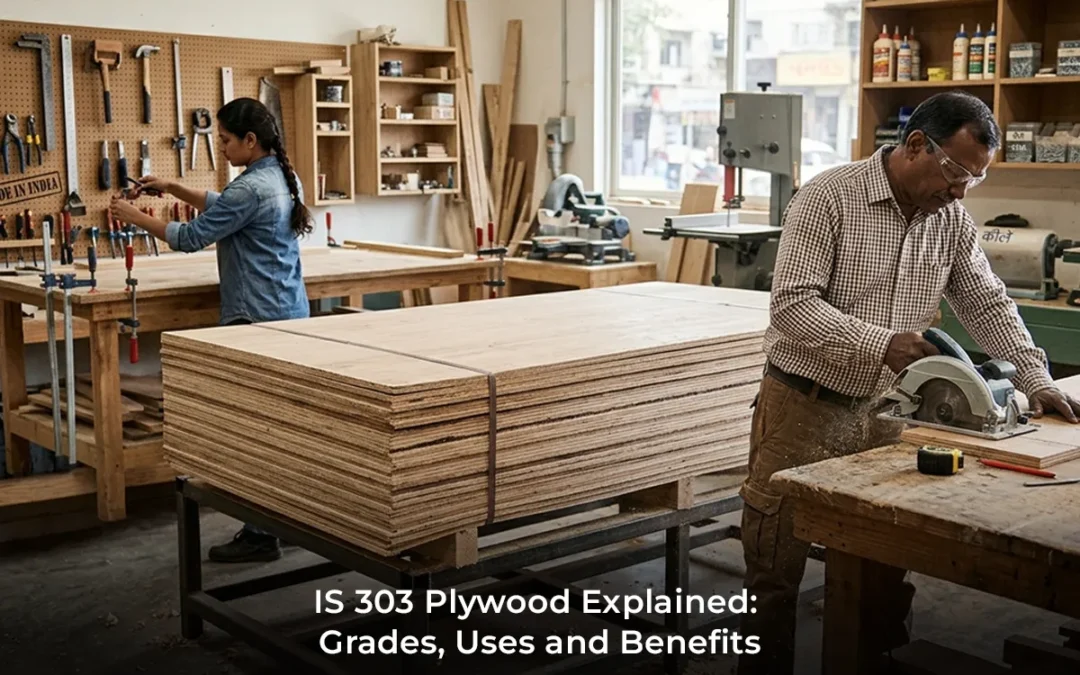
Choosing the right plywood can make a significant difference to the quality and performance of furniture and interior projects. With several plywood grades available, understanding the relevant Indian Standards can help homeowners, architects, contractors, and furniture manufacturers make more informed decisions.
IS 303 Plywood is commonly associated with plywood manufactured according to the requirements of IS 303, an Indian Standard covering plywood for general purposes. It is used across a wide range of furniture, cabinetry, interior, and construction applications.
But what exactly does IS 303 mean, what are the different grades, and where can this plywood be used?
What Is IS 303 Plywood?
IS 303 Plywood refers to plywood manufactured to meet the requirements specified under IS 303, the Indian Standard for plywood intended for general purposes.
The standard provides requirements relating to aspects such as the construction and quality of plywood. However, buyers should not assume that every plywood carrying an IS 303 reference will have identical performance characteristics.
The appropriate product should be selected according to its grade, thickness, intended application, exposure conditions, and manufacturer specifications.
For projects where plywood will be exposed to moisture or demanding conditions, it is especially important to verify whether the selected product is suitable for that specific environment.
What Are the IS 303 Plywood Grades?
Understanding IS 303 Plywood Grades is important because different grades are intended for different levels of exposure and application requirements.
Broadly, plywood under the standard can be classified based on its suitability for different conditions, including interior and exterior applications.
When selecting plywood, look beyond the IS 303 reference and check the specific grade mentioned on the product and its technical documentation.
Factors such as moisture exposure, location, construction requirements, and intended use should influence the final selection.
Why Does the Grade Matter?
The grade provides useful information about where the plywood is intended to be used.
For example, plywood intended for relatively dry interior applications may have different requirements from plywood used in conditions involving greater exposure to moisture.
This is why simply asking for “IS 303 plywood” may not be enough. The buyer should also identify the appropriate grade for the project.
What Are the Main IS 303 Plywood Uses?
The versatility of plywood makes it suitable for a wide variety of furniture and interior applications. Depending on the grade and product specifications, IS 303 Plywood Uses can include:
- Furniture manufacturing
- Wardrobes
- Cabinets
- Tables and desks
- Shelving
- Interior panelling
- Partitions
- Doors and other interior components
- Modular furniture
- General interior applications
The correct grade should always be selected according to the environmental conditions and performance requirements of the specific application.
What Are the Benefits of IS 303 Plywood?
There are several practical IS 303 Plywood Benefits, particularly when the right product is selected for the intended application.
1. Standardized Product Requirements
An important advantage of purchasing plywood manufactured to an Indian Standard is that the product is associated with defined requirements. This gives buyers a useful reference when evaluating material quality.
However, buyers should still verify the product’s certification, grade, specifications, and manufacturer information.
2. Versatile Applications
IS 303 plywood can be used across many furniture and interior applications. This versatility makes it a commonly considered material for residential and commercial projects.
3. Suitable for Furniture and Interiors
Depending on its grade and specifications, plywood can provide a practical substrate for furniture, cabinets, wardrobes, partitions, and other interior elements.
4. Multiple Thickness Options
Plywood is available in different thicknesses to suit different applications. The appropriate thickness depends on the furniture design, structural requirement, span, and method of installation.
5. Supports Different Finishes
Plywood can be finished using laminates, veneers, paints, and other surface treatments, depending on the project requirements and preparation method.
IS 303 Plywood vs Other Plywood Standards
When purchasing plywood, it is common to encounter different Indian Standards associated with different applications.
The important point is that a standard should be considered in relation to the intended use rather than treated as a universal indicator that one plywood product is suitable for every situation.
For example, a plywood intended for general-purpose applications may not automatically be the right choice for areas with continuous moisture exposure.
Before purchasing, consider:
| Factor | What to Check |
| Standard | Applicable Indian Standard |
| Grade | Suitability for intended exposure |
| Thickness | Requirement of the application |
| Moisture exposure | Dry, humid, or wet conditions |
| Application | Furniture, cabinetry, panelling, etc. |
| Certification | Relevant product documentation |
This approach helps avoid choosing plywood based only on the standard number.
How to Choose the Right IS 303 Plywood?
Selecting plywood starts with understanding where and how it will be used.
Consider the Application
A wardrobe, kitchen cabinet, office desk, and interior partition may have different requirements. Identify the intended application before selecting the product.
Check Moisture Exposure
Consider whether the plywood will be used in a dry indoor environment or an area exposed to humidity, splashes, or other moisture.
Select the Appropriate Thickness
Thickness should be selected according to the furniture design, load requirements, dimensions, and installation method.
Verify Product Information
Check the manufacturer’s technical information, grade, certification, and recommended applications.
Consider the Finish
If the plywood will receive laminate, veneer, paint, or another finish, ensure that the selected product is suitable for the intended finishing process.
Why Is IS 303 Important for Furniture and Interior Projects?
Furniture and interior projects involve significant investment in design, fabrication, and installation. The plywood used as the foundation of these elements therefore deserves careful consideration.
Using a product manufactured to a recognized standard can provide a useful starting point when evaluating material options. However, the standard should always be considered together with the product grade and project requirements.
For AK Apple, the focus should be on helping customers understand these differences so they can select plywood based on the actual requirements of their furniture and interior projects.
Common Mistakes to Avoid When Buying IS 303 Plywood
A few simple mistakes can lead to inappropriate material selection.
Choosing based only on the standard: IS 303 alone does not tell you everything about how a product should be used.
Ignoring the grade: Different grades can have different suitability for exposure conditions.
Selecting the wrong thickness: The thickness should match the application’s structural and design requirements.
Not checking certification: Buyers should verify relevant product documentation rather than relying only on verbal claims.
Ignoring moisture exposure: A dry interior and a moisture-prone environment may require different material considerations.
Final Thoughts
Understanding IS 303 Plywood can make the plywood selection process easier, particularly for furniture and interior applications. However, the standard is only one part of the decision.
The appropriate IS 303 Plywood Grades, thickness, product specifications, environmental conditions, and intended use should all be considered before making a purchase. When these factors are matched correctly, plywood can provide a practical foundation for a wide range of furniture and interior projects.
At AK Apple, informed material selection is an important part of creating reliable furniture and interior solutions. Understanding plywood standards helps homeowners, designers, contractors, and manufacturers choose materials with greater confidence.
FAQs
What is IS 303 Plywood?
IS 303 Plywood refers to plywood manufactured according to the requirements of IS 303, an Indian Standard covering plywood for general purposes.
What are the different IS 303 Plywood Grades?
IS 303 covers plywood classifications suitable for different application and exposure requirements. The specific grade should be checked on the product documentation and matched to the intended use.
What are the main IS 303 Plywood Uses?
Depending on the grade and specifications, common applications include furniture, wardrobes, cabinets, tables, shelving, partitions, panelling, and other interior components.
What are the benefits of IS 303 Plywood?
Potential benefits include standardized product requirements, versatility, suitability for furniture and interiors, availability in different thicknesses, and compatibility with various finishing options.
Is IS 303 Plywood suitable for furniture?
Yes, depending on the specific grade and product specifications, it can be used for a wide range of furniture applications.
Is IS 303 Plywood waterproof?
The IS 303 designation alone should not be treated as a guarantee that every product is waterproof. Buyers should check the specific grade, product specifications, and manufacturer’s recommendations for moisture-prone applications.
How do I choose the right IS 303 Plywood?
Consider the intended application, plywood grade, thickness, moisture exposure, finishing requirements, certification, and manufacturer specifications before making a selection.